Syracuse Office: 6624 Joy Road, East Syracuse, NY

Utica Office: 2231 Route 5, Utica, NY

Sales and Service: (315) 732-4111
Celebrating our 70th anniversary!

Syracuse Office: 6624 Joy Road, East Syracuse, NY

Utica Office: 2231 Route 5, Utica, NY

Sales and Service: (315) 732-4111

Safety and Compliance Resources

Safety is a system built from daily habits. Inspections, training, traffic planning, and equipment maintenance all reinforce each other. This resource page gives your team practical checklists and guidance to support safer operations, and it connects you to training when certification or evaluation is needed.

USMH publishes safety-related guidance and emphasizes pairing safety protection strategies with forklift operator training to maximize safety. 

Use this at the start of every shift to identify issues early and keep unsafe trucks out of service.

-Tires, forks, and mast condition

-Brakes and steering response

Horn, lights, alarms, and seatbelt

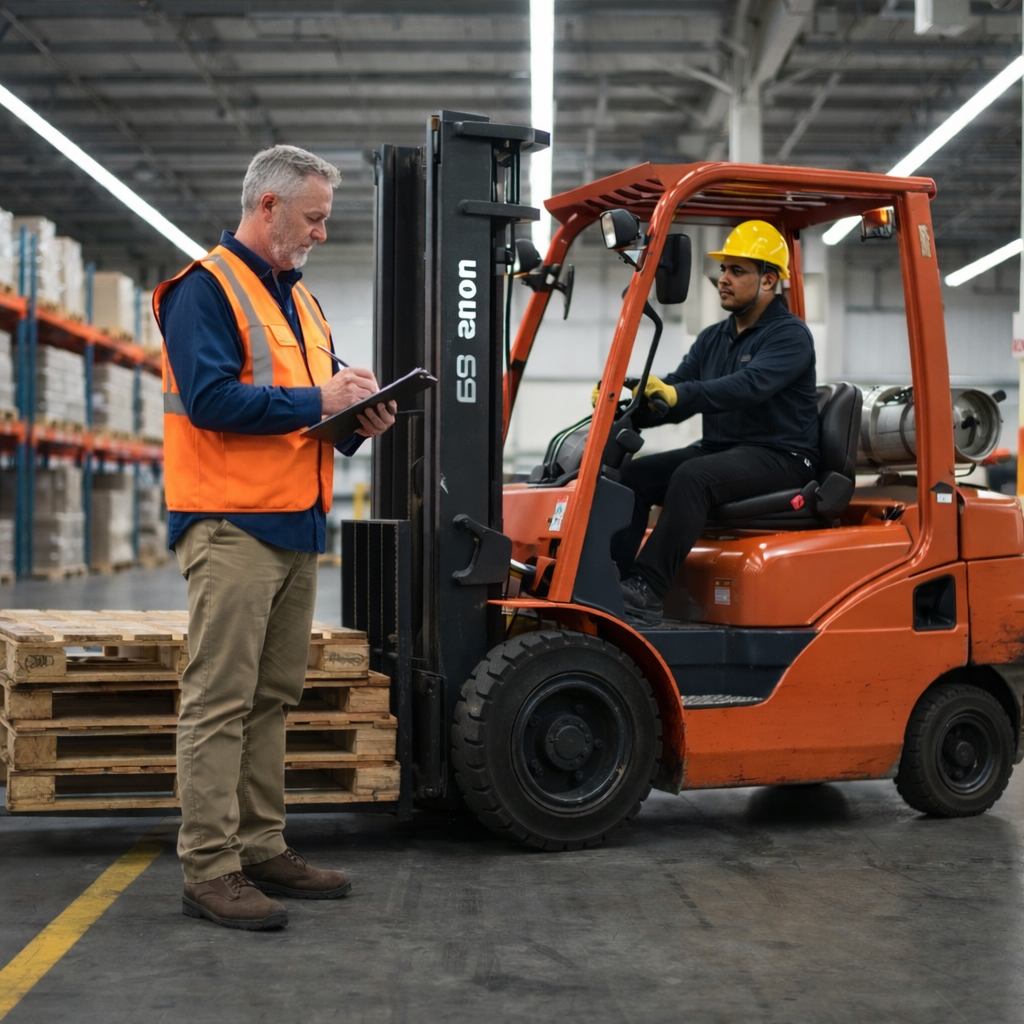
Forklift operator evaluation in warehouse with safety supervisor

-Leaks and visible damage

Battery condition or fuel system check

-Operator notes and supervisor signoff

-Tires, forks, and mast condition

-Brakes and steering response

Horn, lights, alarms, and seatbelt

Forklift operator evaluation in warehouse with safety supervisor

-Leaks and visible damage

Battery condition or fuel system check

-Operator notes and supervisor signoff

Dock safety checklist

Dock zones are high risk. A daily check prevents incidents.

Suggested checklist sections:

Dock leveler condition and operation

Vehicle restraint function

Edge protection and signage

Trailer condition and chocks where applicable

Clear staging zones and no blocked exits

Pedestrian and traffic flow checklist

This helps supervisors identify risky intersections and mixed zones.

Suggested checklist sections:

-Marked walkways and crossings

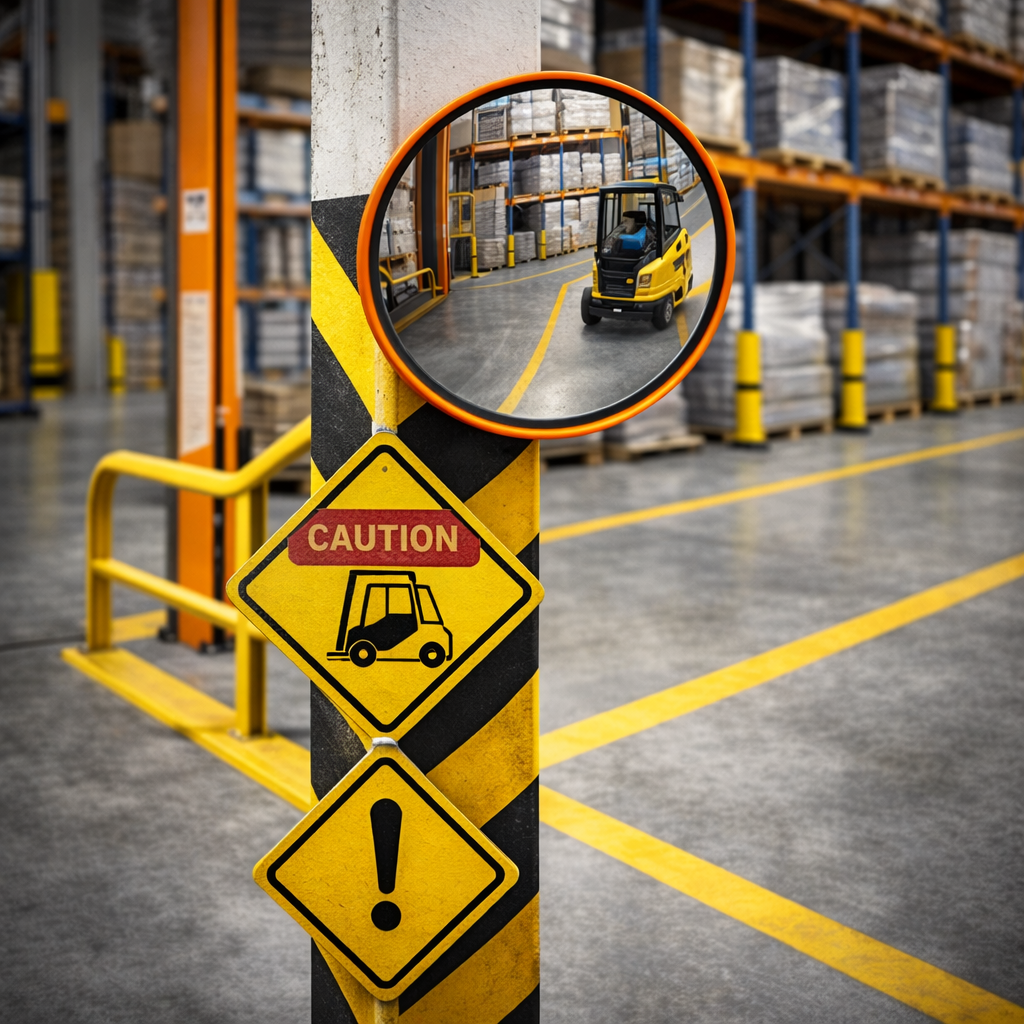
-Blind corner mirrors and signage

-Speed control and right-of-way rules

-Clear separation around charging areas

-Congestion points and staging overflow


OSHA Powered Industrial Truck Training Expectations

OSHA guidance emphasizes that refresher training with evaluation must be conducted to ensure operators have the knowledge and skills to operate safely. OSHA also identifies specific triggers that require refresher training, such as unsafe operation, accidents or near misses, poor evaluations, equipment type changes, or workplace condition changes. 

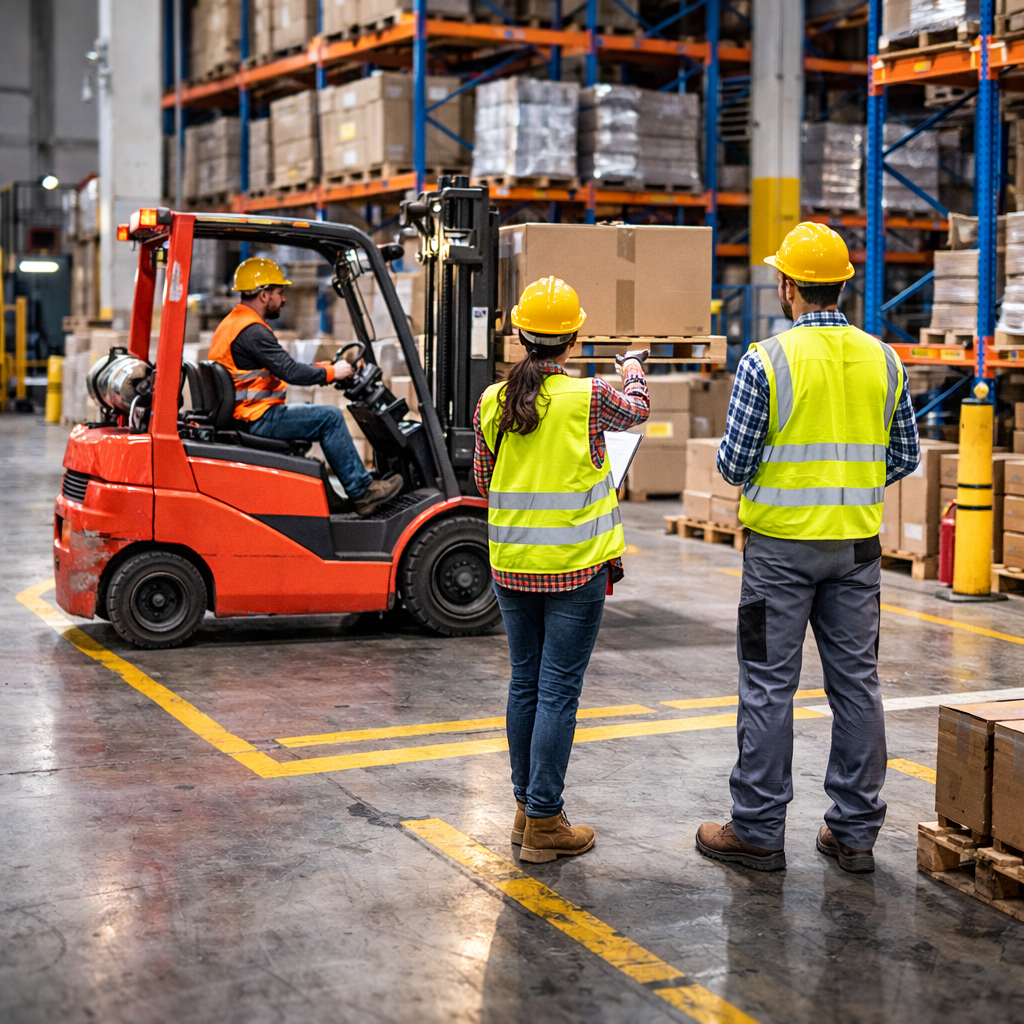
Forklift operation under safety supervision in warehouse environment

Aerial Lift and Scissor Lift Awareness

OSHA regulations address aerial lift equipment requirements, including alignment to ANSI standards for design and construction for certain equipment. 

Safety Best Practices for a Monthly Supervisor Review

Use these topics as a recurring safety rhythm:

  • Intersection behavior and horn use


  • Visibility issues and blind spots


  • Load stability errors and rack impacts


  • Dock procedures and trailer entry rules


  • Battery charging area housekeeping


  • Near-miss reporting and corrective actions


  • Maintenance compliance for high-use units

Aerial Lift and Scissor Lift Awareness

OSHA regulations address aerial lift equipment requirements, including alignment to ANSI standards for design and construction for certain equipment. 

Safety Best Practices for a Monthly Supervisor Review

Use these topics as a recurring safety rhythm:

  • Intersection behavior and horn use


  • Visibility issues and blind spots


  • Load stability errors and rack impacts


  • Dock procedures and trailer entry rules


  • Battery charging area housekeeping


  • Near-miss reporting and corrective actions


  • Maintenance compliance for high-use units
Forklift operation under safety supervision in warehouse environment

Connect Safety to Maintenance and Training

Safety improves when three things work together:

  • Operators are trained and evaluated
  • Equipment is maintained on schedule
  • The facility is designed to separate hazards
  • Operators are trained and evaluated
  • Equipment is maintained on schedule
  • The facility is designed to separate hazards

USMH provides service support including planned maintenance, and also provides fork truck safety training.