Training is one of the highest ROI safety investments in a warehouse or industrial facility. Strong operator skills reduce incidents, reduce product and equipment damage, and improve daily productivity.
USMH offers forklift safety training and certification, and also discusses customized programs including forklift and scissor lift operations with hands-on guidance tied to the real work environment.
OSHA requires powered industrial truck operators to be trained and evaluated, and it outlines when refresher training must occur based on unsafe operation, incidents, poor evaluations, equipment changes, or workplace changes.
Training is not just a compliance checkbox. It is a system that helps you:
Lower incident risk and near-misses
Reduce equipment damage and repair cost
Improve load handling confidence and speed
Create consistent standards across shifts and sites
Training Programs Available Through USMH
Forklift operator training and evaluation
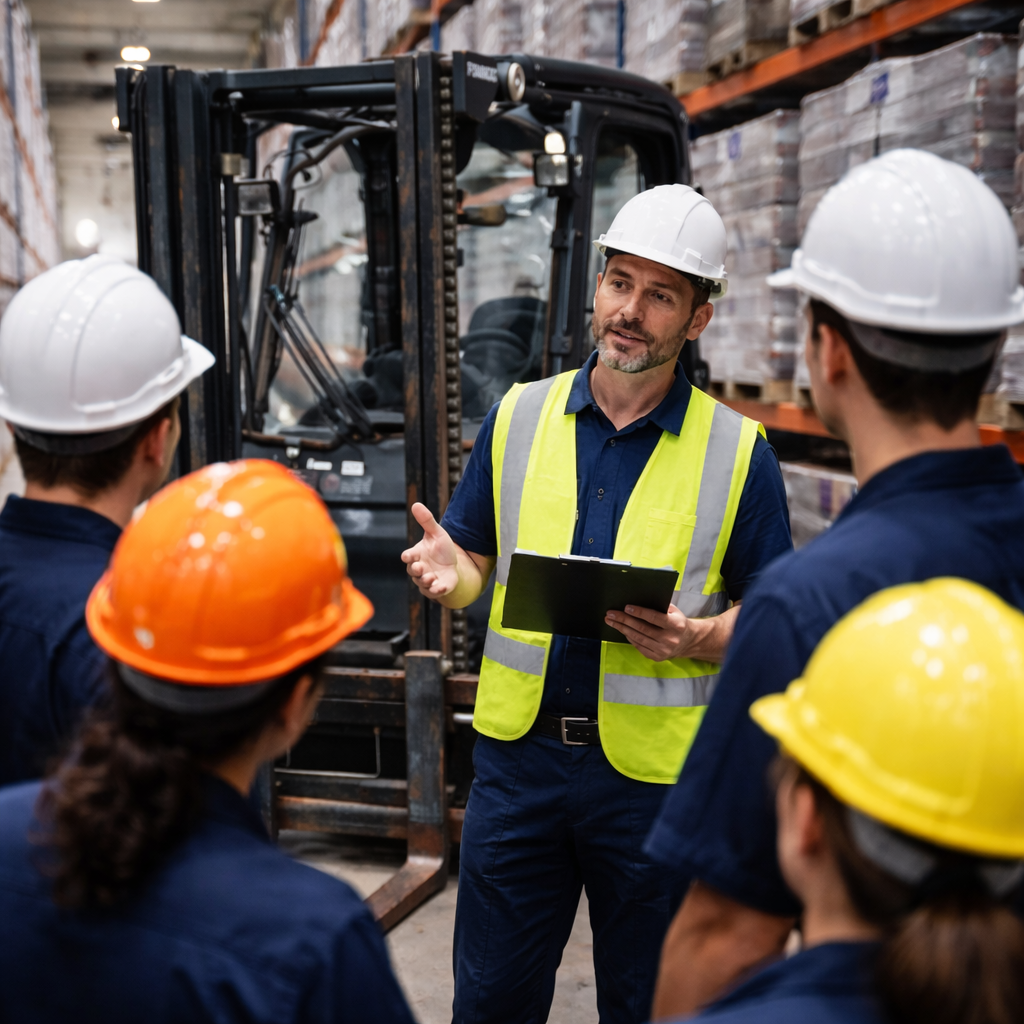
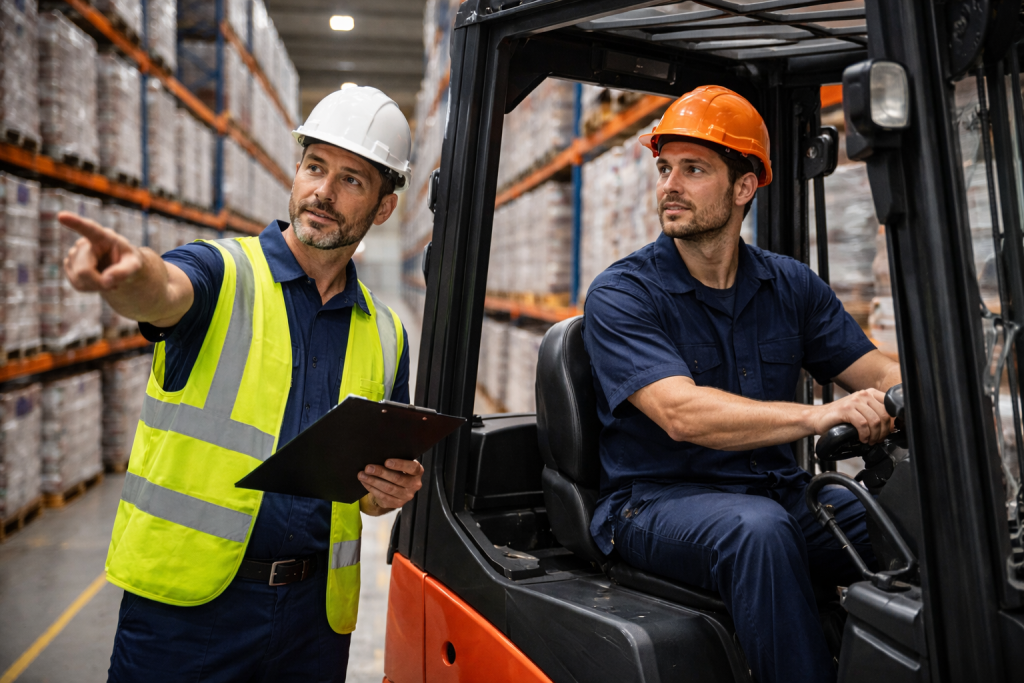
Forklift training focuses on safe operation fundamentals, stability, load handling, turning and stopping behavior, visibility, and workplace hazard awareness. It also includes evaluation so employers can document competence.
Walkie pallet truck and motorized hand truck basics
For operations using motorized pallet jacks and walkie units, training focuses on pedestrian interaction, load stability, and controlled travel in congested areas.
Pedestrian safety and traffic flow awareness
A major portion of risk in warehouses is lift truck and pedestrian interaction. This training supports safer intersections, clearer right-of-way practices, and better aisle behavior.
Aerial lift and scissor lift safety fundamentals
For elevated work, OSHA standards for aerial lifts relate to equipment requirements, and training should align to the work and equipment type in use.
Basic operator inspection and care routines
Operators learn how to complete pre-shift checks, identify problems early, and report issues before they become failures.
Training Format and Scheduling Options
USMH training is designed to be practical and tied to your environment. Common options include:
Training reduces downtime in two ways. First, safer operation reduces damage events that take equipment out of service. Second, operators who understand equipment limits are less likely to over-stress components.
USMH also highlights that safety training helps avoid compliance issues and reduces equipment damage tied to improper use.
Who This Training Is For
Warehousing and distribution teams
Manufacturing operations
Cold storage and food workflows
Logistics and transportation hubs
Any operation using powered industrial trucks or aerial lifts
Training FAQ
When is refresher training required
OSHA outlines refresher triggers including unsafe operation, accidents or near misses, poor evaluations, changes in truck type, and workplace condition changes. Additionally, recertification is required every 3 years
Is hands-on training important
Yes. Competence is built through practical operation and evaluation in the environment where employees work.
Can we schedule training around production needs
Yes. Many operations schedule training to minimize disruption by using smaller groups or shift-based planning.
Schedule Operator Training
Tell us what equipment you use, how many operators you need trained, and your scheduling requirements. USMH will help you set up a program that supports safety and productivity.