
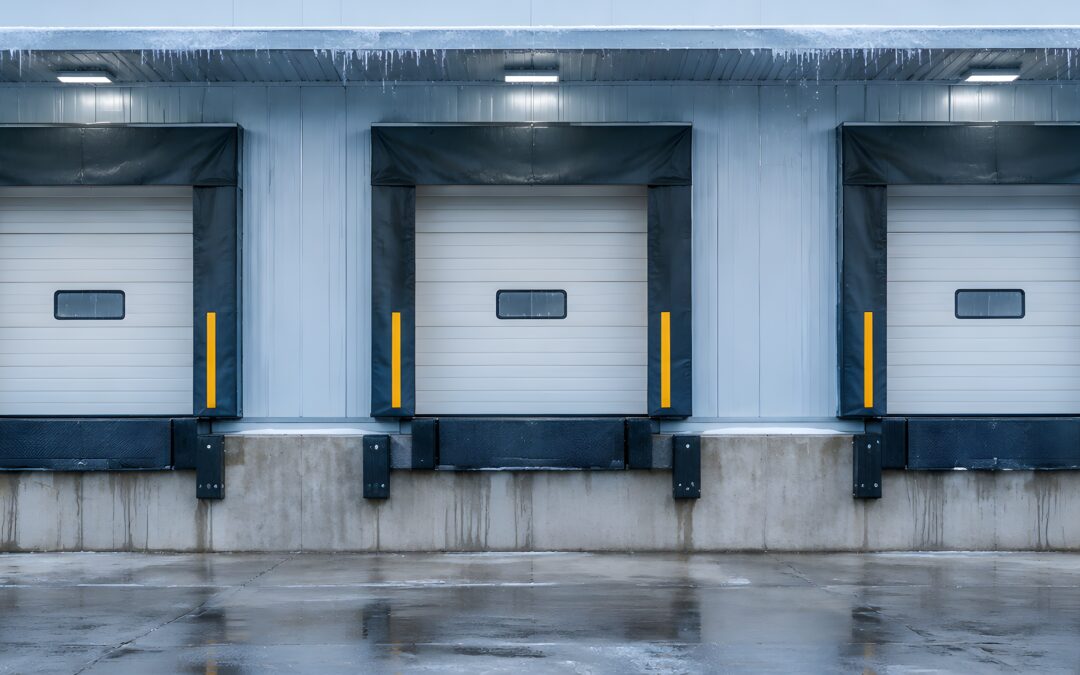
In Central New York, winter shows up at the loading dock first. Every time a door opens, cold air, snow, and moisture push straight into your building. Heating bills climb, floors get slick, and equipment that ran fine in October starts acting up in January. Most of these problems are predictable, and they’re far easier to fix in the fall.
Dock Seals vs. Dock Shelters: Which One Fits Your Dock?
The gap between a trailer and your building is the biggest source of heat loss at most docks. Seals and shelters both close that gap, but they work differently.
Dock seals are compressible foam pads covered in heavy fabric. The trailer backs into them and presses them tight against its sides and top. That makes the tightest seal you can get, which makes them the stronger choice for:
- Docks that see mostly the same trailer size
- Refrigerated and temperature-controlled facilities
- Operations where energy savings are the priority
The trade-off is contact. The pads take abuse from every trailer, so they wear faster, and they can partly block the trailer opening.
Dock shelters are frames mounted around the door with flexible side and head curtains. The trailer backs in and the curtains wrap around it without the trailer pressing into a pad. Shelters are better for:
- Docks that receive a mix of trailer heights and widths
- Operations that need full, unobstructed access to the trailer opening
- Higher-volume docks where seal pads would wear out quickly
The seal isn’t quite as tight as a compression seal, but a well-fitted shelter still blocks most wind, snow, and rain.
Rule of thumb: if your trailers are consistent and holding temperature is critical, go with a seal. If your trailers vary or you need full access to the trailer width, a shelter is usually the better fit.
Signs Your Current Seals or Shelters Need Attention
Seals and shelters wear gradually, so problems are easy to miss. Walk your docks with a trailer in place and check for:
- Daylight visible around the trailer edges
- Torn or frayed fabric, especially at the corners
- Foam pads that stay flat instead of springing back
- Missing or damaged head curtains at the top of the opening
- Drafts, snow, or water on the dock floor after a trailer pulls away
Close the Other Air Gaps
Seals and shelters handle the trailer gap, but cold also gets in around the leveler and door.
- Leveler weather seals. Brush or rubber seals along the sides and back of the leveler pit block drafts coming up from underneath. They’re often overlooked and often worn out.
- Door bottom seals. A torn or flattened seal on the bottom of the overhead door lets cold air and snow blow in even when the door is closed.
- Door condition. Doors that don’t close fully, or that get hit and bent, leave gaps. Get damaged panels and tracks fixed before the cold sets in.
If you’re considering new levelers, vertical levelers let the door close directly against the dock floor for a tighter seal.
Get Dock Equipment Ready for Cold Weather
Freezing temperatures are hard on dock equipment. Before winter:
- Check hydraulic levelers for leaks and make sure the fluid is right for cold operation. Sluggish movement in the cold is often a fluid or seal problem.
- Inspect mechanical leveler springs and hold-downs. Cold makes weak components fail sooner.
- Test vehicle restraints. Ice and packed snow can keep restraints from engaging properly. Clear them regularly and confirm the signal lights work.
- Keep wheel chocks on hand at every door as a backup.
- Replace worn dock bumpers. Icy lots make trailers harder to control, and bumpers take more hits.
Prepare Your Forklifts and Material Handling Equipment
Winter is tough on the equipment moving across your docks, too.
- Cold reduces battery capacity. Keep electric forklift batteries fully charged, and check water levels and connections.
- Worn tires lose traction fast on wet or icy dock plates. Replace them before they become a slip hazard.
- Fluids and filters. Service engines, check antifreeze in internal combustion units, and store propane cylinders properly.
- Lights and alarms. Winter days are short. Make sure forklift lights, dock lights, and backup alarms all work.
Keep the Dock Area Safe
Winter slips and falls are among the most common warehouse injuries. A few habits help:
- Clear snow and ice from the dock approach, apron, and trailer beds before loading
- Keep absorbent mats and ice melt near every door
- Check that drains at the dock well aren’t clogged and letting water pool and freeze
- Remind drivers and operators to slow down on wet leveler decks and trailer floors
A Quick Fall Checklist
Before the first real storm, make sure you’ve:
- Inspected every seal and shelter with a trailer in place
- Replaced worn pads, curtains, and door bottom seals
- Checked leveler weather seals and hydraulic systems
- Tested vehicle restraints and dock lights
- Serviced forklifts, including batteries and tires
- Stocked ice melt, mats, and wheel chocks at each door
Get Your Dock Ready Before the Snow Flies
U.S. Materials Handling helps warehouses and distribution centers across Central New York keep their docks running year-round. Our team can inspect your dock equipment, recommend the right seals or shelters for your trailers, and handle repair and maintenance on levelers, restraints, and forklifts before winter hits.
Want to go deeper on energy savings? Read why Upstate New York distribution centers rely on dock seals, or browse our dock levelers and vehicle restraints.
Call our Syracuse or Utica office at (315) 732-4111 to schedule a winter readiness inspection.