
When your business depends on moving heavy loads between floors, the right vertical lift system can transform your operations. Two common solutions are Vertical Reciprocating Conveyors (VRCs) and freight elevators. While both help with vertical material transport, they differ significantly in cost, functionality, and compliance requirements. At usmaterialshandling.com, your trusted source for material handling equipment and solutions, we’ll break down the differences so you can make an informed decision for your facility.
What Is a Vertical Reciprocating Conveyor (VRC)?
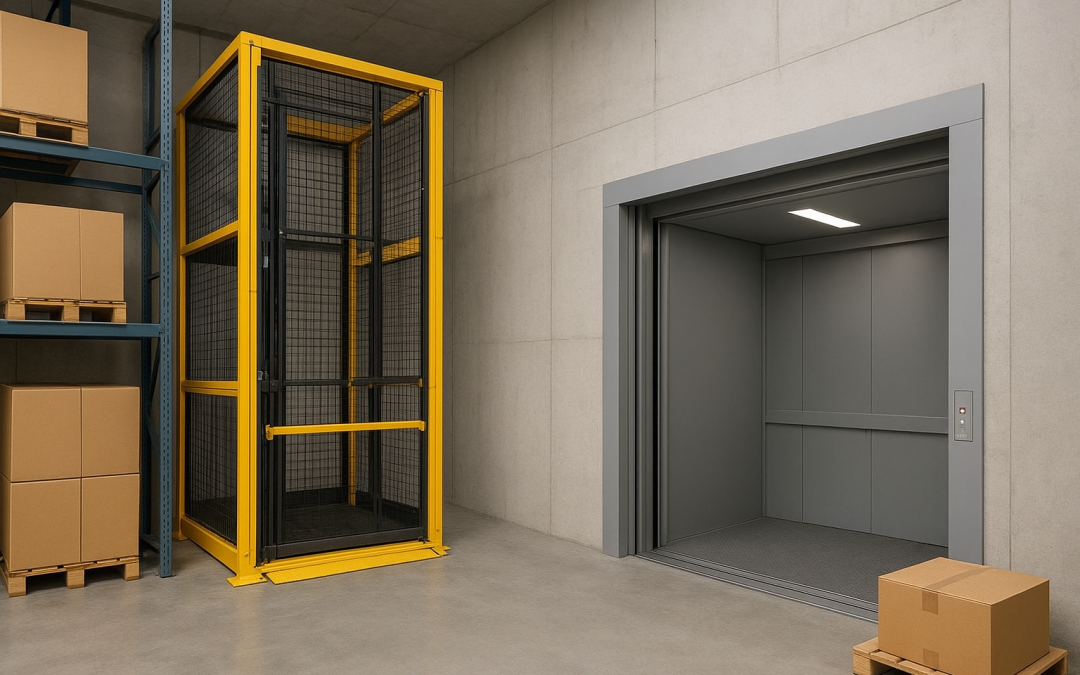
A VRC is a material lift designed specifically for moving goods—not people—between different levels. VRCs are often used in warehouses, distribution centers, and manufacturing plants. They provide a safe, efficient, and cost-effective way to move pallets, boxes, or heavy materials.
Key Benefits of VRCs:
- Lower cost than freight elevators.
- Simplified permitting process (since they’re not passenger elevators).
- Faster installation and less maintenance.
- High weight capacity, ideal for pallets and bulk loads.
If your operation only needs to move materials, a VRC is typically the most affordable and efficient choice.
What Is a Freight Elevator?
A freight elevator is a heavy-duty elevator designed to carry both goods and, in some cases, operators or riders. Unlike VRCs, freight elevators must meet strict elevator code compliance and undergo more rigorous inspections.
Key Benefits of Freight Elevators:
- Approved for both goods and personnel transport.
- Can serve multi-story facilities with higher travel distances.
- Often comes with larger platforms and customizable designs.
If your facility requires transporting workers along with loads, or if you operate in a multi-floor retail or commercial setting, a freight elevator may be necessary.
VRCs vs. Freight Elevators: Which Is Right for You?
Choosing between a VRC and a freight elevator depends on your facility’s needs, budget, and compliance requirements.
Consider a VRC if:
- You need a lower-cost solution.
- You only move goods (not people).
- You want faster installation and reduced maintenance costs.
Consider a freight elevator if:
- You need to move both personnel and materials.
- Your facility is multi-story with complex traffic needs.
- You require full compliance with elevator codes.
Why Partner with U.S. Materials Handling?
At usmaterialshandling.com, we specialize in more than just VRCs and freight elevators. We offer a full range of material handling solutions, including:
- New and used equipment for sale: Forklifts, lift trucks, pallet jacks, reach trucks, order pickers, telehandlers, aerial lifts, scrubbers, sweepers, and rough terrain forklifts.
- Rentals: Flexible short-term and long-term options to keep your operations running smoothly.
- Parts and service: Fast, reliable support to minimize downtime.
- Operator training & financing: Helping you get the most out of your investment.
Whether you’re ready to buy a forklift, rent a lift truck, or get a quote on a VRC, our team makes it simple and hassle-free.
Get Expert Advice Today
Deciding between a VRC and a freight elevator is a big investment—and you don’t have to make it alone. The experts at U.S. Materials Handling are here to help you choose the right lift system for your facility, budget, and compliance needs.
Next Steps:
- Browse our inventory of forklifts and lift equipment.
- Request a quote on VRCs, freight elevators, or any equipment you need.
- Schedule service to keep your lifts running at peak performance.
- Contact us today for expert guidance on material handling solutions near you.
At usmaterialshandling.com, we make it easy to get the equipment, service, and support your business needs to succeed.